
Case Study(Academic Project)
End-to-End Product Design: TravelNowFrom requirements to prototype — creating clarity, structure, and execution.
Intro
Project Overview
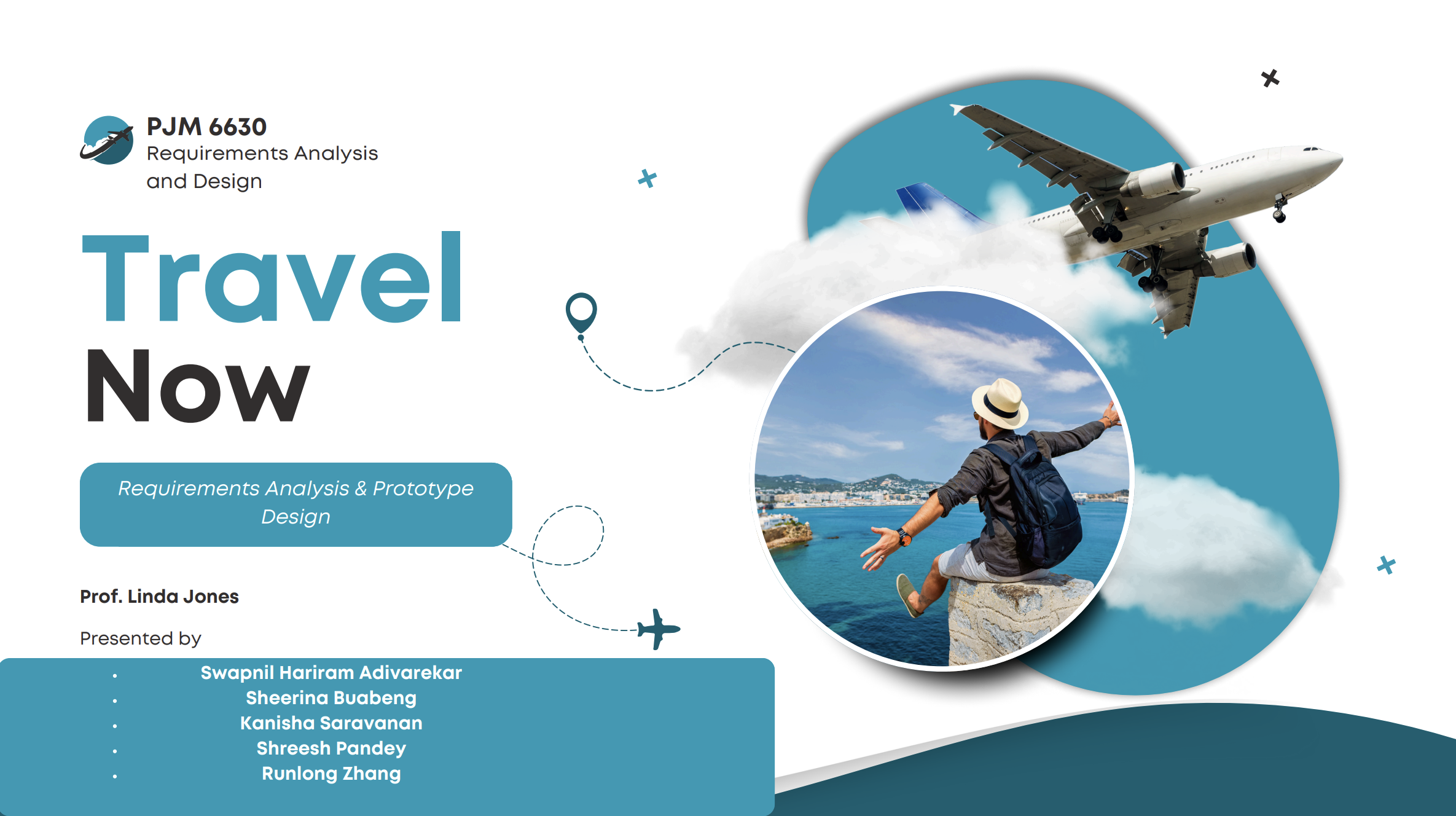
TravelNow was a structured product design and requirements engineering project completed in PJM 6630. Our objective was to analyze an end-to-end travel booking workflow, identify user needs, document functional and non-functional requirements, build use case models, and develop a working Power Apps prototype.
Working collaboratively, I contributed across the full lifecycle, requirements elicitation, stakeholder modeling, context analysis, diagramming, and prototyping. This project demonstrates my ability to analyze ambiguity, create structure, and move a solution from conceptual modeling to a functional prototype with traceability.
Details
Defining a Clear, Unified Travel Booking Experience
Challenge
Travelers often struggle with fragmented booking experiences, switching between multiple sites to search flights, compare hotels, view trips, and complete payments. This results in confusion, duplicate data entry, and inconsistent user journeys.
For the TravelNow system, we started with a vague assignment and no predefined functional scope. Our primary challenge was to:
-
Identify the real user needs
-
Bring clarity to ambiguous requirements
-
Define what the system should include (and not include)
-
Create alignment on the end-to-end workflow
This required structured thinking, stakeholder analysis, and a strong foundation in business and system modeling.
Solution
We applied a structured requirements analysis and design approach to transform ambiguity into a clear, actionable system model.
Our solution included:
-
Mapping the complete traveler journey from search → booking → payment → trip management
-
Developing context diagrams and stakeholder models to define system boundaries
-
Documenting functional and non-functional requirements using the Volere method
-
Creating business and system use case diagrams
-
Building a functional Power Apps prototype aligned to the requirements
This approach ensured traceability from initial discovery to the final working prototype — creating a cohesive and user-centered travel booking solution.
REQUIRMENTS DOCUMENT
32+
Prototype Screens Built
12
Modeling Artifacts Created
6
End-to-End Workflow Mapped
1

Our Solution Approach
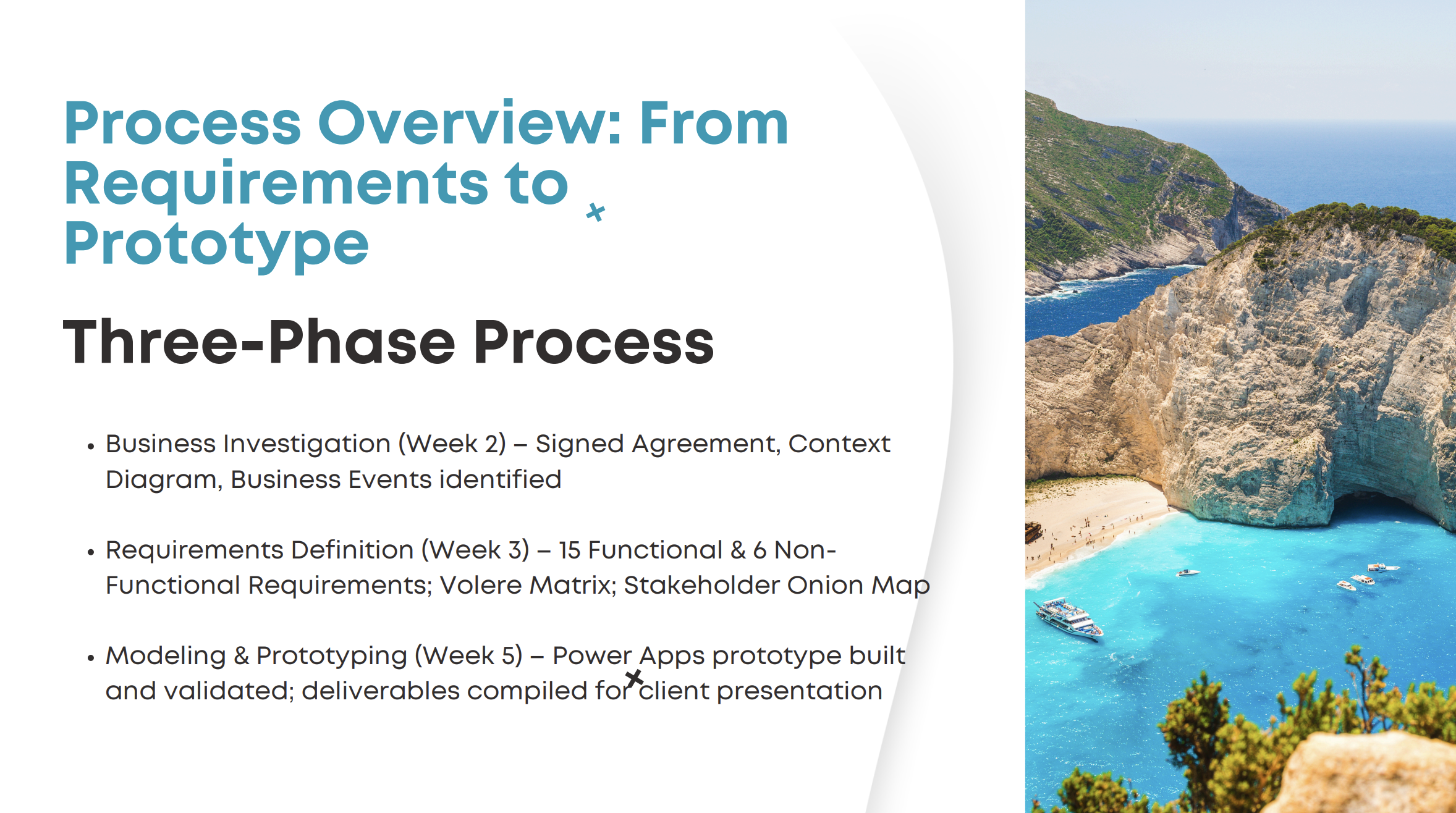
We followed a structured, multi-step approach to transform the TravelNow problem into a clear system design and functional prototype.
1. Business Investigation & Problem Understanding
We mapped the complete traveler journey:
-
Searching flights
-
Comparing options
-
Booking itineraries
-
Selecting hotels
-
Viewing and managing trips
-
Completing payments
This helped us clarify scope and establish the baseline for system functionality.
2. Stakeholder & Context Modeling
We developed:
Stakeholder Onion Model
Identified primary, supporting, and external stakeholders including travelers, airlines, hotels, and payment systems.
Context Diagram
Defined system boundaries, interactions, and data flows across all actors.
These artifacts aligned the team and clarified system expectations.
3. Requirements Development
We documented:
Functional Requirements
Core user actions—search flights, book hotels, manage trips, complete payments.
Non-Functional Requirements
Usability, performance, reliability, and security factors.
Volere Requirements Matrix
Used to categorize, validate, and trace requirements to use cases and prototype screens.
4. Use Case Modeling
We developed:
-
Business Use Case Diagram
-
System Use Case Diagram
-
Detailed Use Case Narratives (flows, exceptions, postconditions)
These ensured internal consistency and guided prototype design.
5. Prototype Development
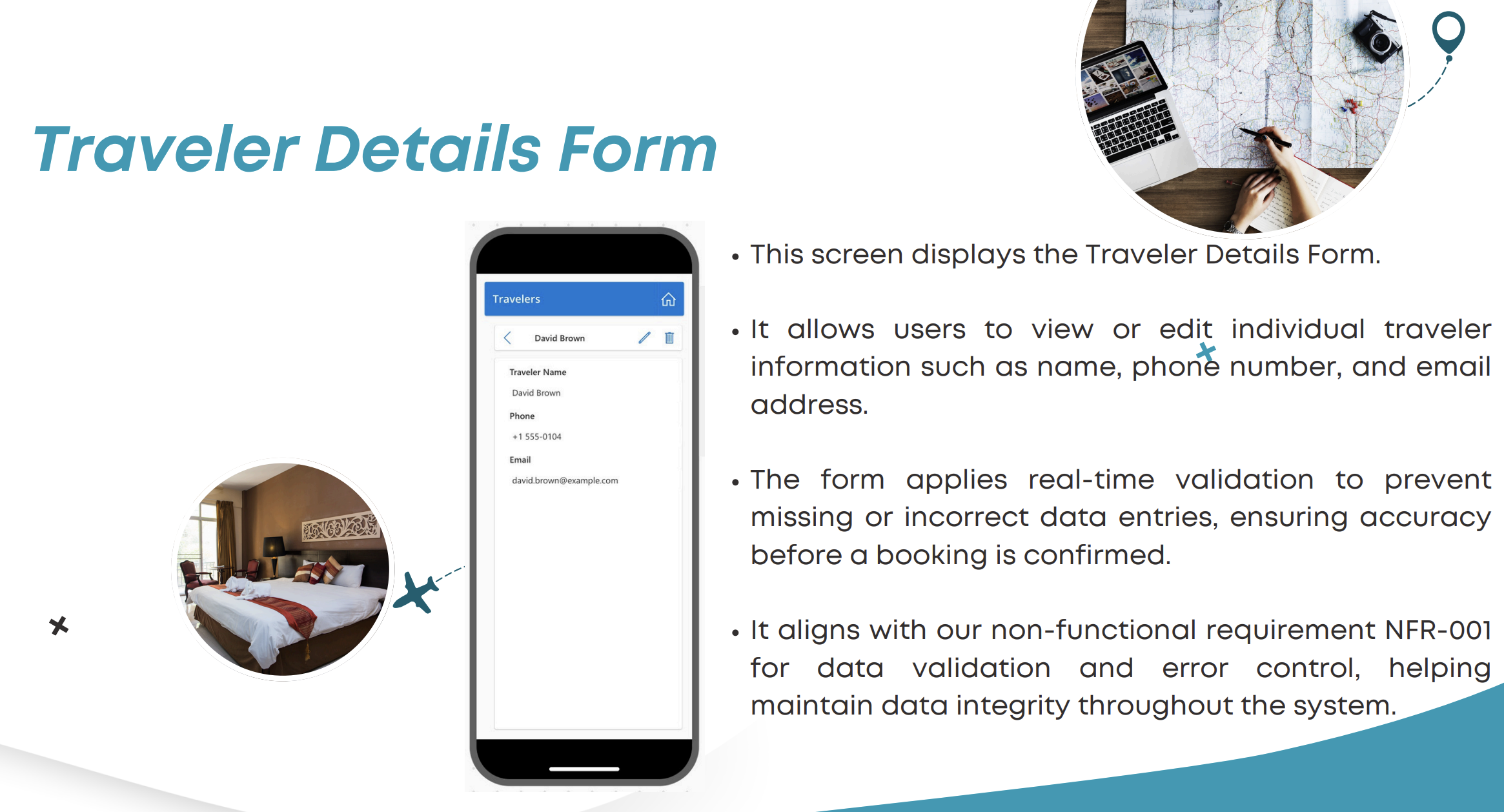
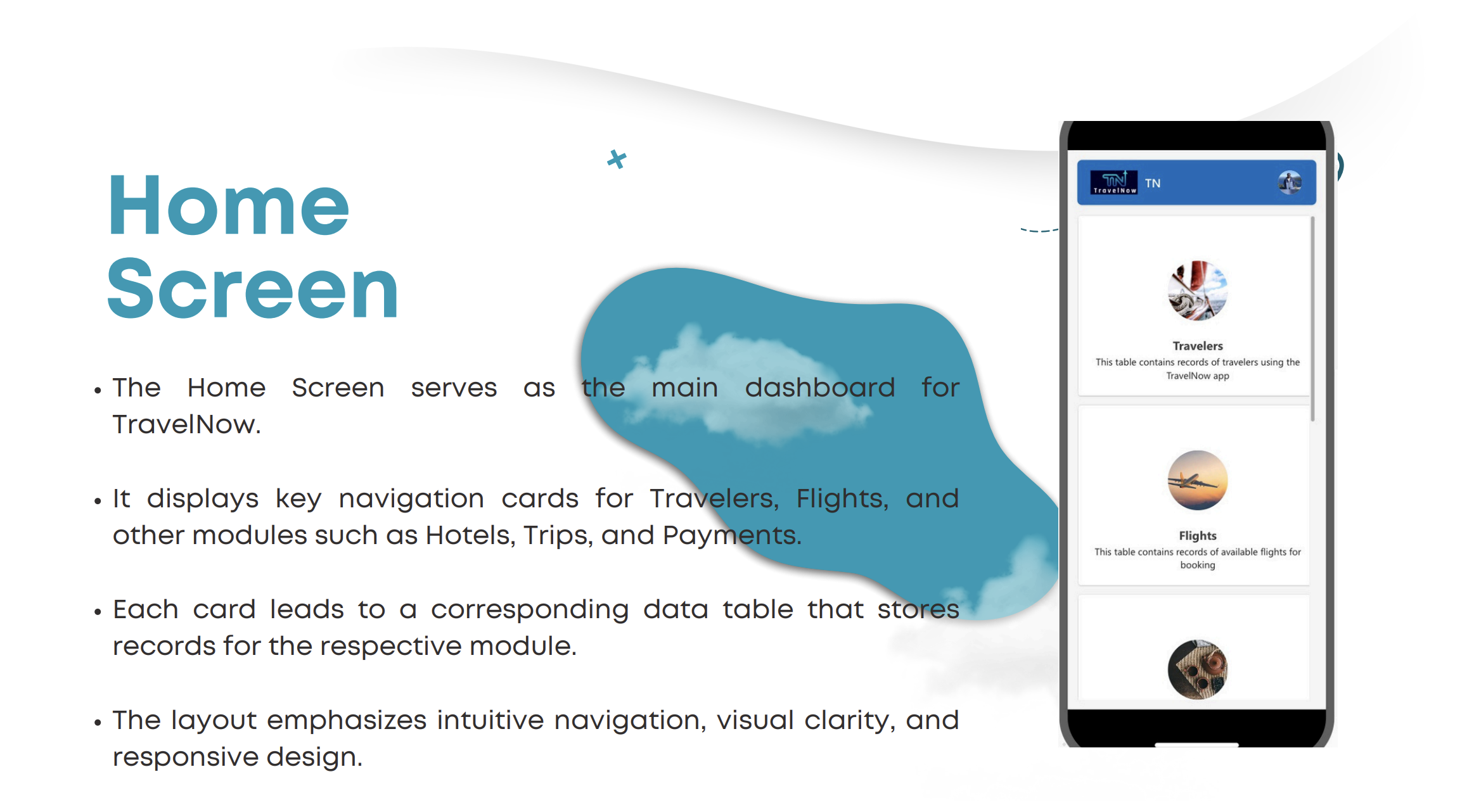
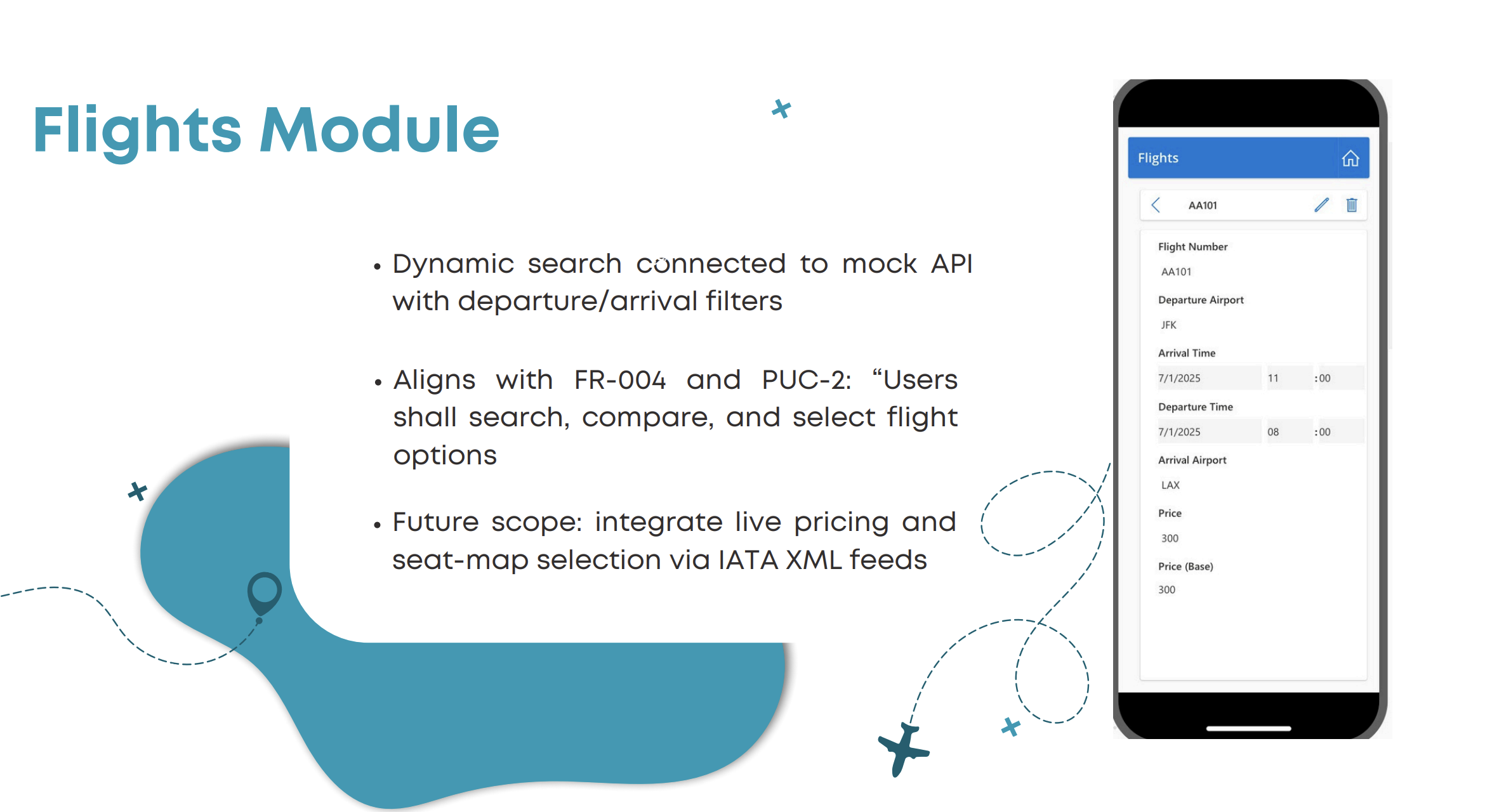
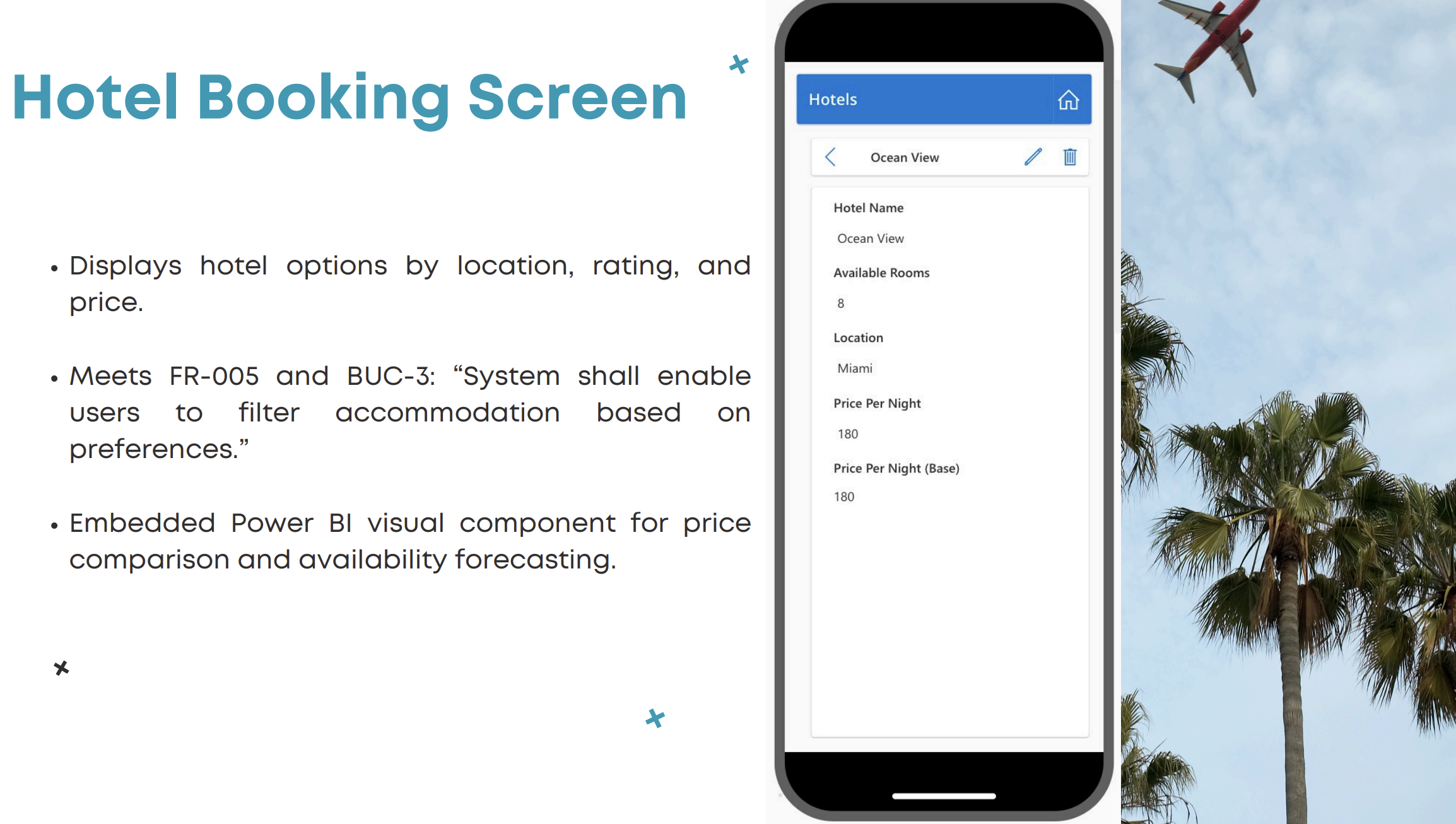
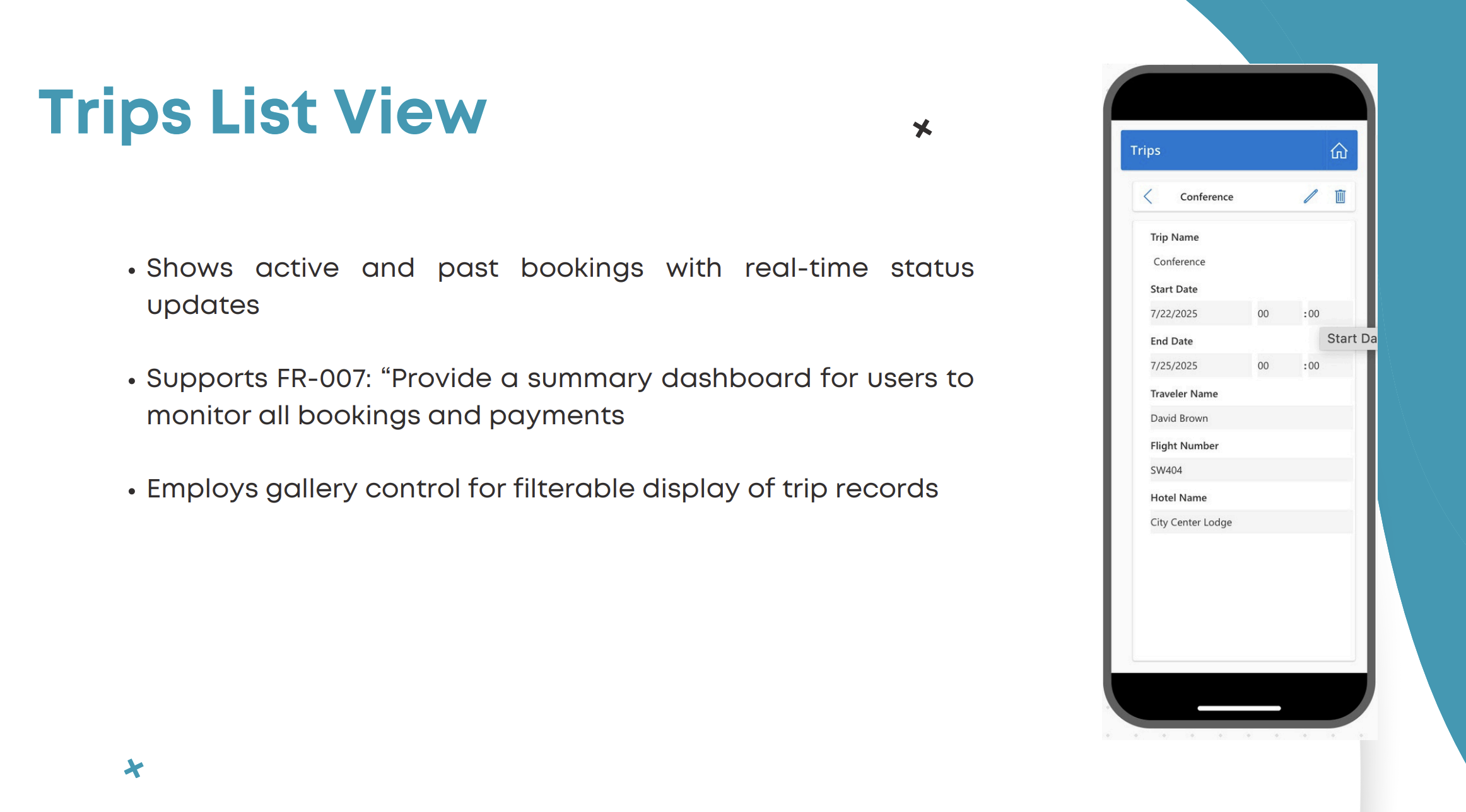
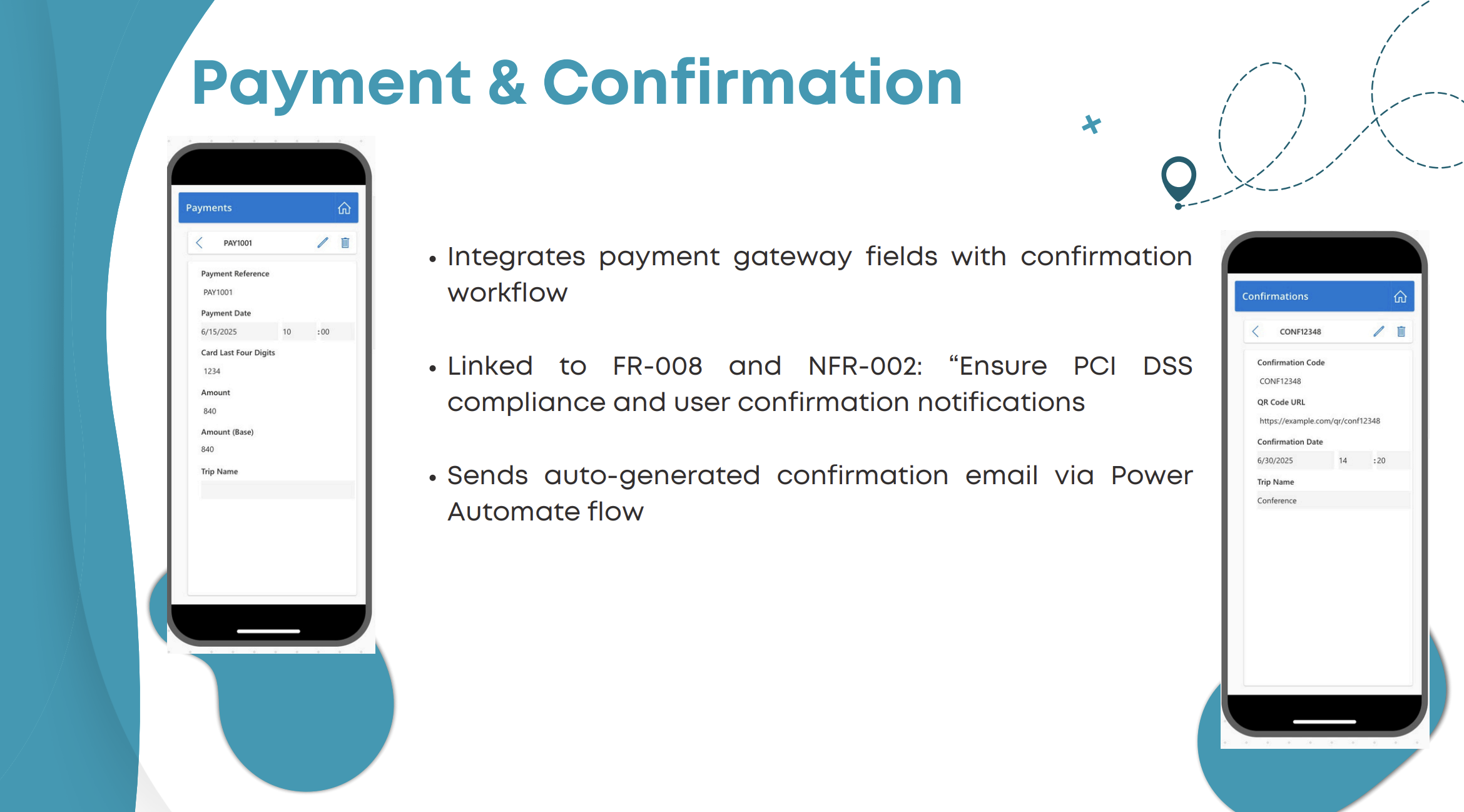
Using Microsoft Power Apps, we built a functional prototype featuring:
-
Home and trip overview screens
-
Flight search and booking flow
-
Hotel search and booking flow
-
Traveler information form
-
Payment confirmation workflow
Each screen directly tied back to the requirements, ensuring completeness and traceability.
Details
Results & Reflection
Outcomes
The TravelNow project delivered:
-
A validated and fully traceable requirements set
-
Complete stakeholder, context, and use case models
-
A functioning Power Apps prototype aligned with user needs
-
Clear mapping from requirements → diagrams → prototype
-
A structured approach to problem-solving
These outcomes demonstrated not only technical understanding but also effective cross-functional collaboration and systems thinking.
Reflection
This project strengthened my ability to:
-
Work through ambiguity and create clarity
-
Extract meaningful requirements using structured analysis
-
Communicate system behavior using diagrams and narratives
-
Translate documentation into a tangible prototype
-
Think like a builder—breaking large problems into clear steps
This experience sharpened my foundational skills as a Tech Project Manager and Business Analyst, preparing me to guide digital projects from exploration to execution.
REQUIRMENTS DOCUMENT
32+
Prototype Screens Built
12
Modeling Artifacts Created
6
End-to-End Workflow Mapped
1
Quote
“Without data, you’re just another person with an opinion.”
W. Edwards Deming (Quality & Process Legend)
Get In Touch
https://www.linkedin.com/in/swapnilaadi/