Case Study(Academic Project)
Unifying Claims Operations Through Business ArchitectureBuilding clarity, alignment, and a scalable operational model after a major insurance merger.
PROJECT OVERVIEW
The merger of Green Lizard and Global Promise created a fragmented, duplicated, and culturally misaligned claims operation. Two legacy teams were using different processes, tools, and decision patterns — causing resistance, confusion, and missed efficiencies.
My role in this project was to design a strategic business architecture blueprint that brought:
value-stream clarity
aligned stakeholder expectations
harmonized processes
capability maturity insights
a measurable performance framework
This case study demonstrates how structured modeling, experience mapping, and capability analysis can unify operations after a merger.
Details
Building Alignment, Clarity & Structure in a Post-Merger Claims Organization
Challenge
After the merger of Green Lizard and Global Promise, the organization faced a fragmented claims operation with misaligned processes, duplicate work, and inconsistent decision-making. Two legacy teams were operating independently, creating friction, inefficiencies, and customer dissatisfaction.
The core challenges included:
-
No unified claims workflow across the merged companies
-
Overlapping roles and unclear ownership
-
Variations in process maturity and cultural resistance
-
Missing capability visibility and performance metrics
-
Lack of a shared future-state direction
To move forward, the organization needed clarity, alignment, and a structured architecture to unify how claims work would be performed.
Solution
We applied a structured business architecture approach to bring alignment across people, process, and technology. Our solution included:
-
Mapping the end-to-end claims value stream to understand how work currently flowed
-
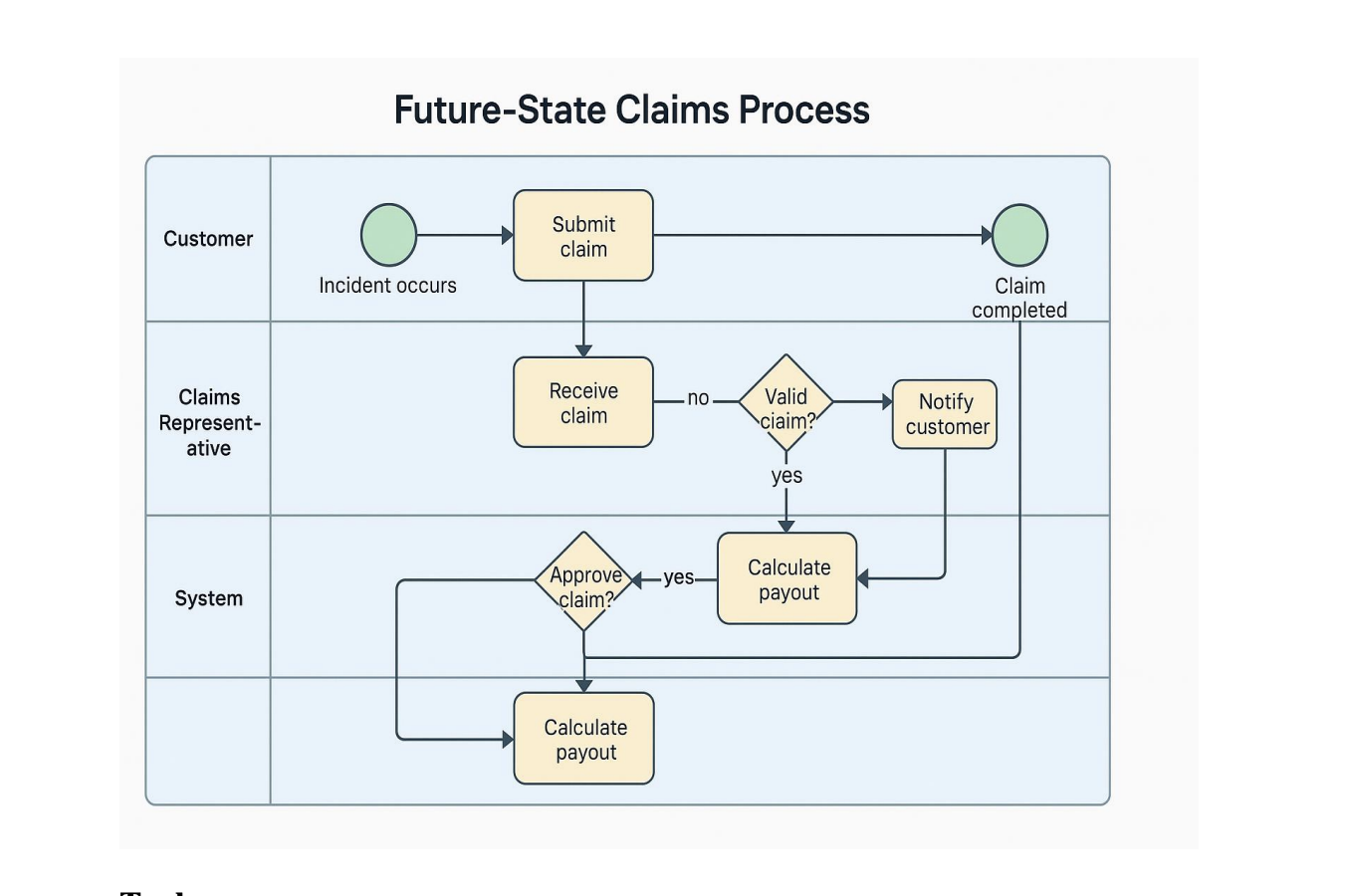
Modeling current-state processes using BPMN to expose redundancies and gaps
-
Designing a unified future-state claims process aligned with best practices
-
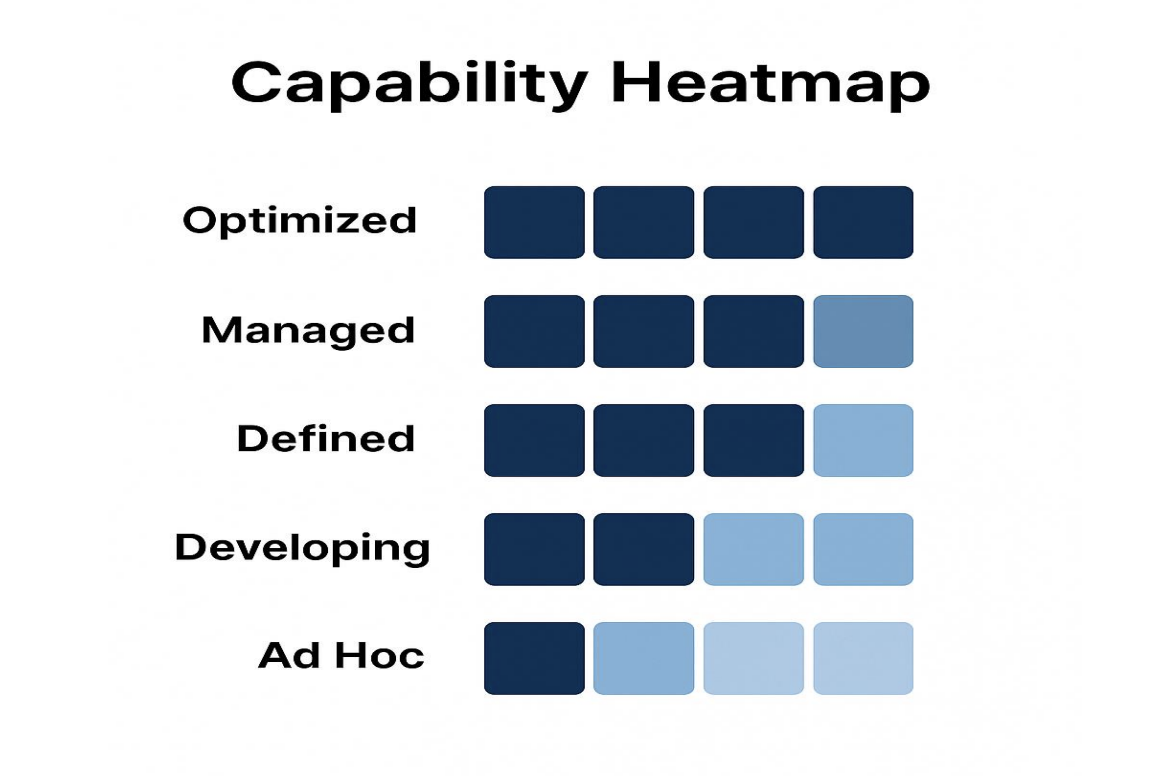
Building a capability map + maturity model to identify gaps and investment priorities
-
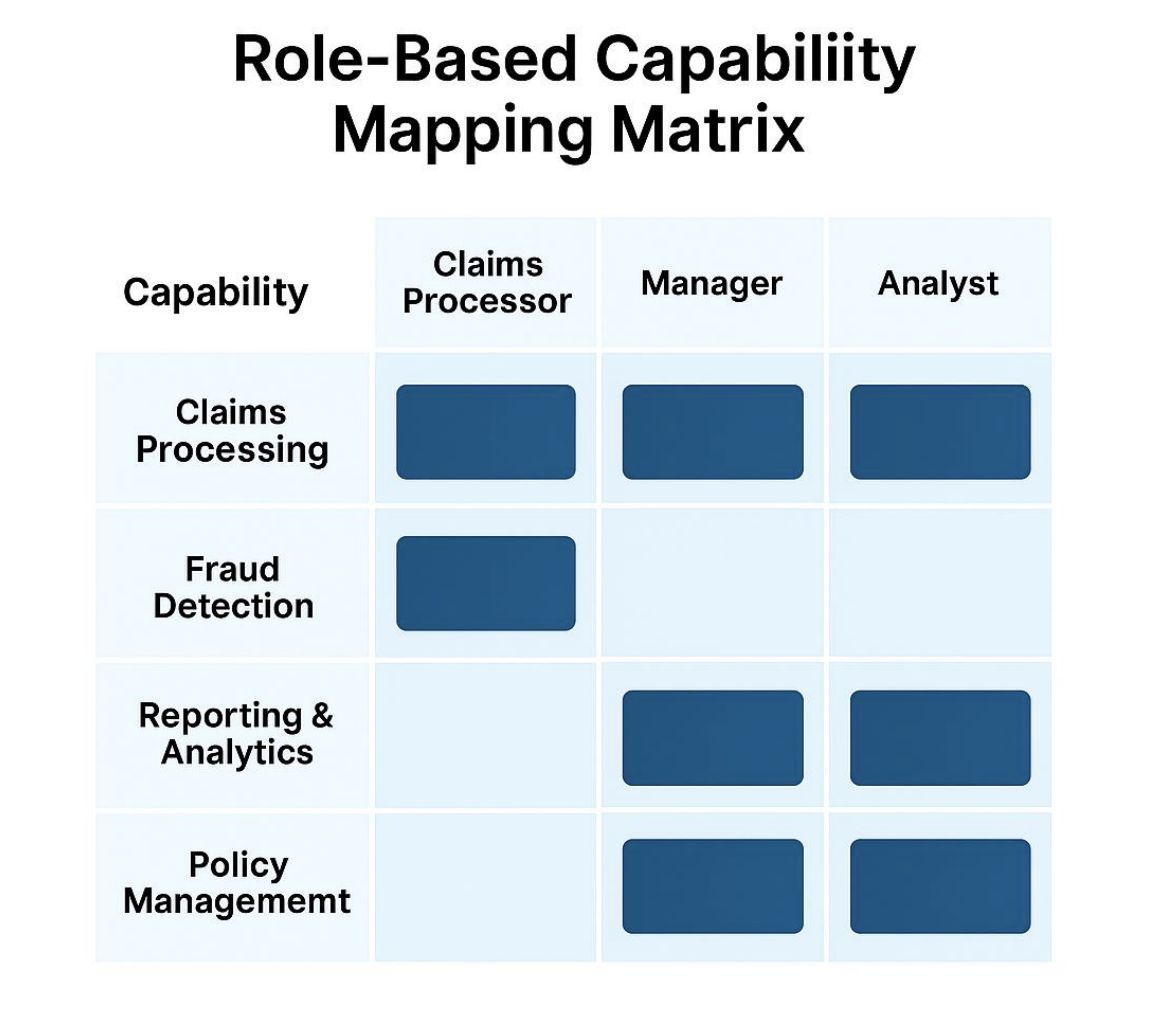
Clarifying stakeholder roles across both legacy teams using a responsibility matrix
-
Defining a performance measurement framework to track operational improvement
This structured approach created a clear, shared, and scalable operating model for the new claims organization.
CAPABILITIES MAPPED
18
PROCESS MODELS CREATED
4
Modeling Artifacts Created
6
MATURITY GAPS IDENTIFIED
12

Our Solution Approach
We applied a structured business architecture approach to bring alignment and clarity.
1. Scoping Business Architecture Work
Defined the boundaries of the work using:
• Value streams
• Stakeholder alignment workshops
• Empathy tools & experience mapping (Kalbach)
• Jobs-To-Be-Done (JTBD)
This created a unified vision across both organizations.
2. Process Architecture for Claims
Using Exhibits C & D, I mapped the current processes across:
claims intake
validation
investigation
resolution
Tools used:
• BPMN 2.0
• Swimlane diagrams
• Business Process Manifesto principles
Future-state process was designed to remove redundant steps and standardize the lifecycle.
3. Capability Map Development
Capabilities identified:
• Claims Intake Management
• Fraud Detection
• Claims Assessment
• Digital Document Management
• Customer Service Communication
Using the 5-Level Capability Maturity Model, we produced a heatmap to show:
current maturity
target maturity
critical gaps
investment priorities
4. Business Performance Measurement Plan
Metrics were defined using:
• Balanced Scorecard
• Outcome mapping
• BPM lifecycle metrics
KPIs included:
• Cycle time
• NPS
• Validation accuracy
• Fraud detection rate
• Employee engagement
This ensured the future claims organization could measure progress and make data-driven adjustments.
Details
Results & Reflection
Outcomes
This engagement delivered:
• A unified, value-driven architecture across both companies
• Standardized future-state claims process
• Capability maturity baseline + target roadmap
• Role clarity across the merged organization
• A measurable performance framework to guide execution
• Stakeholder alignment around a shared future vision
Together, these created the blueprint for a scalable, efficient claims operation.
Reflection
This engagement delivered:
• A unified, value-driven architecture across both companies
• Standardized future-state claims process
• Capability maturity baseline + target roadmap
• Role clarity across the merged organization
• A measurable performance framework to guide execution
• Stakeholder alignment around a shared future vision
Together, these created the blueprint for a scalable, efficient claims operation.
CAPABILITIES MAPPED
18
PROCESS MODELS CREATED
4
Modeling Artifacts Created
6
MATURITY GAPS IDENTIFIED
12
Testimonial
“However beautiful the strategy, you should occasionally look at the results.”
Winston Churchill
Get In Touch
https://www.linkedin.com/in/swapnilaadi/